Featured Purchase Your Heritage Pass
This May, discover the story of Jersey’s Liberation at the end of the Second World War.
Hamptonne Country Life Museum / Open until 12 May
This exhibition, tells the Occupation story of Hamptonne and examines how farming recovered after Liberation. As Jersey’s major industry before and after the Second World War, it was seen as vital that farming should prosper following the Occupation. By May 1945, Islanders were concerned that the unique Jersey breed of cattle was under threat due to looting and food shortages, and many felt the decimated farms would never get back to pre-war production. They could not have been more wrong. Learn the surprising story of how farms survived the Occupation and thrived following Liberation.

Tomato Packing 1946.
Hamptonne Country Life Museum / Open until 12 May
Immerse yourself in this captivating ten-minute projected film, ‘A Day to Remember’. As the magnificent events unfold, we hear from Islanders who witnessed them, as well as evacuees in England and deportees in Germany.
Drawing upon archive film and an immense library of stills, we experience the anticipation of freedom, the final surrender on 9 May 1945 and the arrival of Force 135, set to clear away the aftermath of war and make the Island safe again.

Liberation Day May 9th 1945.Laura Bisson hands out Union Jack flags from the top of the Old Soldier, 32 New Street, St Helier .
At Jersey Museum
After the celebrations are over, how do you manage the transition from military rule to civilian administration? How do you unite a population divided by loss, separation, and suspicions of collaboration? And how do you return the Island to prosperity after five years of economic isolation and mounting war debts?

The Occupation collections contain some of the most unique objects in Jersey’s museum collections, serving as evidence of the ingenuity, creativity and bravery of Islanders in the face of hardship. During the five-year period in which Jersey was occupied by German forces, Islanders battled severe shortages of food, supplies and materials, and were forced to make, reuse and repurpose anything they could.
Whilst occupied, German forces outlawed the use of radios, and in 1942 ordered that all Islanders must hand these into the authorities. It is estimated that over 10,000 wireless sets were confiscated in the month following the issuing of this order. Many Islanders, struggling with the lack of news about the progress of the war, risked imprisonment by keeping radio sets and listening to illegal broadcasts during this time. Some even made homemade crystal radios, a simple form of radio receiver that was generally small and therefore easy to hide. The crystal radios that we have in the collection are reminders of what Islanders endured during the war years, and they allow us to keep sharing stories such as this one. Hundreds of people, like Mr Holley, put themselves at enormous risk by keeping wireless sets when this became illegal, and surviving objects, like the walnut radio, are a testament to the bravery of Islanders.
There are many examples of crystal radios in the museum collection, but perhaps the most unique example is one which consists of parts of a radio carefully hidden inside the shell of a walnut. This walnut radio was created by Bernard Holley, a radio engineer who worked at W. H. Cole’s wireless shop in Halkett Street from the late 1930s. Keep reading…
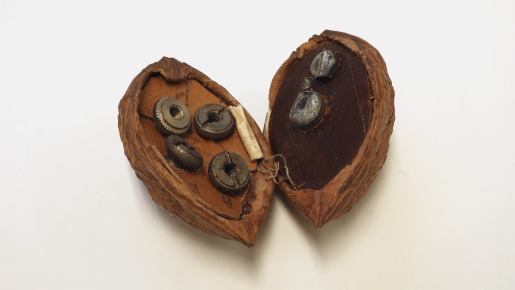
Walnut radio (open), created c.1940-1945
In this episode, we are exploring the fascinating Frank Falla Archives with Professor Gilly Carr, who specialises in conflict, archaeology, and Holocaust heritage. The Frank Falla Archives is a collection of records telling the story of Channel Islanders who were deported and imprisoned during World War II.
Listen wherever you get your podcasts.


Set on a clifftop overlooking Corbière lighthouse on Jersey’s south-west tip, the Radio Tower provides stunning self-catering accommodation over six floors and boasts a jaw-dropping 360-degree view from the lounge. Built during the Second World War by German Occupying Forces, the Tower has been sympathetically restored in a German modernist style.
Book nowRead more stories about the Island's Occupation and Liberation

Discover sites of civilian wartime protest and defiance in Occupied Jersey during World War II.
Find out more
German forces occupied large parts of mainland Europe, meaning the Channel Islands shared a common experience with many Europeans.
Find out more
The Channel Islands were occupied by Nazi forces during World War II, read one woman's extraordinary story.
Find out more
A brief history of the German Occupation of Jersey, from 1 July 1940 to 9 May 1945
Find out more
A two-person resistance campaign lead by two artists during the Occupation of Jersey
Find out more
Claude Cahun (1894-1954) was an artist, photographer and writer, best known today for surreal self-portrait photographs.
Find out more
From eyewitness stories, to temps passe footage, Jersey Heritage TV has a wealth of video featuring one of the most momentous days in Jersey’s contemporary history.
Take a look here


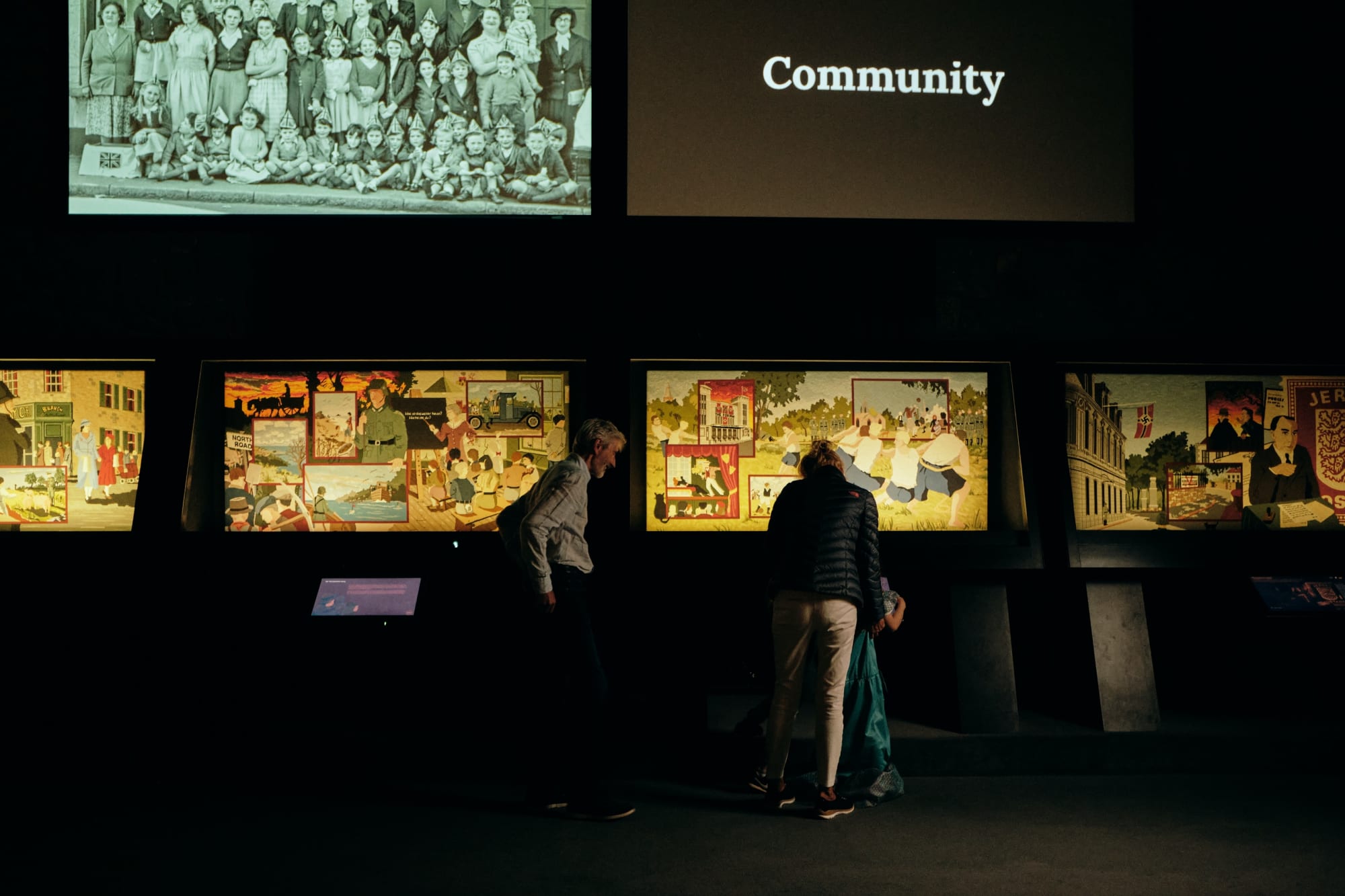
The gallery shows 13 panels of the tapestry woven by Islanders, which depicts a life of hardship during the five years of Occupation by German armed forces during the Second World War. Each panel was then woven by one of the twelve parishes which make up the Island.
Find out moreWe taken on the responsibility of organising the Slave Workers’ Memorial Ceremony, held in the grounds of Jersey Crematorium at Westmount on Liberation Day.
The annual ceremony remembers the plight of the thousands of forced and enslaved labourers who were brought to Jersey against their will during the Occupation by Organisation Todt, the Nazi civil and military engineering organisation responsible for the Atlantic Wall fortifications.

Jersey Archive holds thousands of records from the period of the Occupation by German forces during the Second World War (1940-1945): from the UNESCO-recognised Bailiff’s Chambers Archive and Occupation registration cards, to the hundreds of family collections which contain personal accounts of life in Jersey during the Occupation.
In 2011, the Jersey Occupation Archive (being the Bailiff’s Occupation and Liberation Files and Occupation Registration Cards) held at Jersey Archive were inscribed on the UNESCO UK Memory of the World Register. The register includes records which embody pivotal moments in the history of their communities and the British Isles as a whole.
While these records are just some of the public records that tell the official story of the Occupation, Jersey Archive also holds hundreds of collections of individuals and families which contain personal accounts of life in Jersey during the Occupation.
Inspired by Peter Jackson’s film They Shall Not Grow Old, documentary producer Alastair Layzell set out to colourise black-and-white photographs of Liberation.