
Featured Purchase Your Heritage Pass
German forces occupied large parts of mainland Europe. Therefore the Channel Islands and Islanders shared a common experience of living under occupation with many other Europeans.
One of the trails is dedicated to the Jersey Stolpersteine – which translates as stumble stones – have been laid in Jersey to remember Islanders who were persecuted during the German Occupation from 1 July 1940 to 9 May 1945. They include those oppressed for their Jewish origins, others convicted of acts of resistance or attempted escape, individuals sent to Alderney as slave labourers or interned in Germany due to being British born. This trail will help you find the locations of all the Stolpersteine and provides detailed biographies for each person. The trail itself is in two parts, one to the east of the Island and one to the west.

'Stolpersteine Trail: Martha Bernstein outside the former home of Lucy Schwob and Suzanne Malherbe.
Approximately 6,000 foreign workers – men and women – were brought to the Island against their will by the Organisation Todt (OT). Here they were made to take part in the construction of defensive concrete fortifications and sea walls, and the excavation of tunnels for artillery and ammunition storage and were often subjected to harsh conditions and near starvation.
How workers were treated depended entirely on which country they came from – all workers were exposed to dangerous working conditions and forced to work long hours with very little food. Soviet slave workers were subjected to by far the worst treatment and amongst whom were the most casualties. The Forced Workers Trail signposts places around the Island that are associated with the workers’ experience including work sites, places of punishment, buildings that formed part of the OT infrastructure as well as places of remembrance and commemoration.

Forced Workers' Trail: Slaveworkers' Memorial. Photo by Jersey Evening Post.
The Jersey Liberation route consists of 13 important locations related to the events of the Liberation in May 1945, or those forming part of the broader Liberation story. The route includes St Helier Harbour and Liberation Square where Islanders congregated on 9 May ‘Fauvic Embarkation Point’ on Jersey’s east coast, from where many Islanders attempted to escape during the Occupation, and the memorial on the Albert Pier to the International Red Cross ship, SS Vega, which brought much-needed supplies to a starving population.

Liberation of St Helier: V for Victory, Royal Square.
This trail consists of 17 special places that speak of the Islanders’ path to freedom. They include locations intimately connected to the events of the Liberation of Jersey, places where brave acts of resistance against the German Forces took place and important sites of remembrance.

Liberation of Jersey: Liberation Square
During a three-year period from the autumn of 1941, approximately 6,000 foreign workers – men and some women – were brought to German-occupied Jersey against their will by the Organisation Todt (OT), the civil and military engineering body of Nazi Germany. 16,000 workers in total were brought to the Channel Islands as a whole.
In Jersey the workers were kept in 13 forced labour camps, often located near to construction sites, which have now been marked with the first Liberation Route Europe Vectors of Memory to be laid in the Channel Islands. This themed route will lead you to all of the camps and share some of what we know about the experiences of the workers.
Workers were made to participate in the construction of concrete fortifications, excavation of tunnel complexes, the gathering of sand and stone and the unloading of materials from barges. They came from numerous countries including Algeria, Belgium, Czechoslovakia, France, Holland, Italy, Morocco, Poland, Russia, Senegal, Spain, Tunisia and Ukraine. The workers, who were a mixture of civilians and military prisoners of war, fell roughly into two categories: labourers from Western Europe and North Africa were conscripted or forced workers – they were paid in Occupation Reichsmarks and free to move around the Island outside of working hours, subject to curfew. Soviet workers from Ukraine, Belarus and Russia were regarded as dispensable slave labour – they received no payment or freedom and were treated with wanton brutality. It is unclear at this time which category the Polish workers fell in to. All nationalities were subject to dangerous working conditions, long working hours on starvation rations and physical abuse.
This trail, and its route-markers, represents an important permanent addition to Jersey’s commemorative landscape. These largely forgotten sites of suffering, and the people who inhabited them, can now be appropriately remembered.

A Vector of Memory points to the location of Lager Brinkforth on La Grande Route des Mielles, St Ouen, now occupied by the Jersey Scouts Centre.

Across Europe, people remember the victims of National Socialism at various locations. A part of this European culture of remembrance is filled by the so-called Stolpersteine.


History
Discover sites of civilian wartime protest and defiance in Occupied Jersey during World War II.

History
A brief history of the German Occupation of Jersey, from 1 July 1940 to 9 May 1945

History
The Channel Islands were occupied by Nazi forces during World War II, read one woman's extraordinary story.
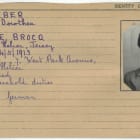
Jersey Archive holds thousands of records from the period of the Occupation by German forces during the Second World War (1940-1945): from the UNESCO-recognised Bailiff’s Chambers Archive and Occupation registration cards, to the hundreds of family collections which contain personal accounts of life in Jersey during the Occupation.